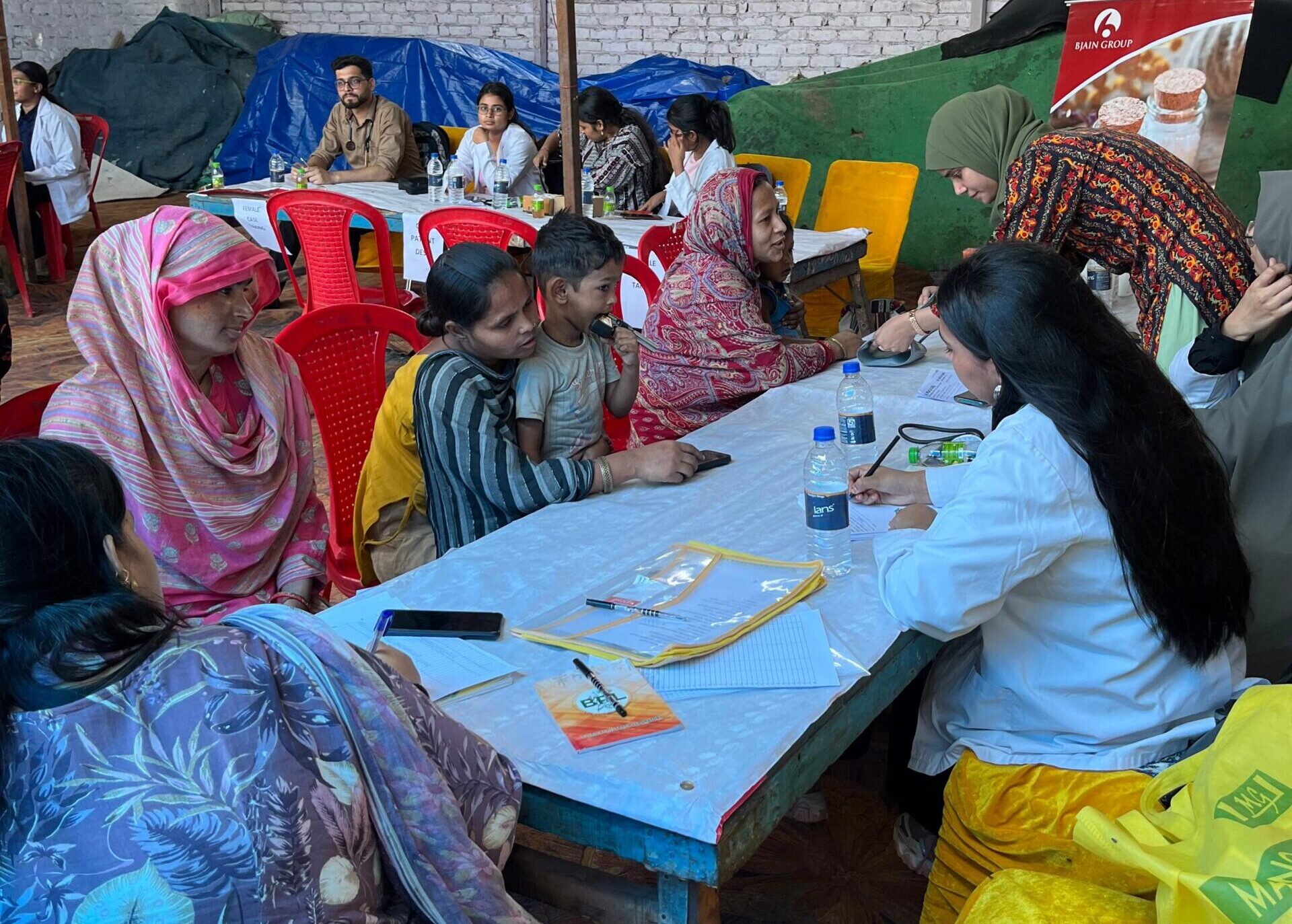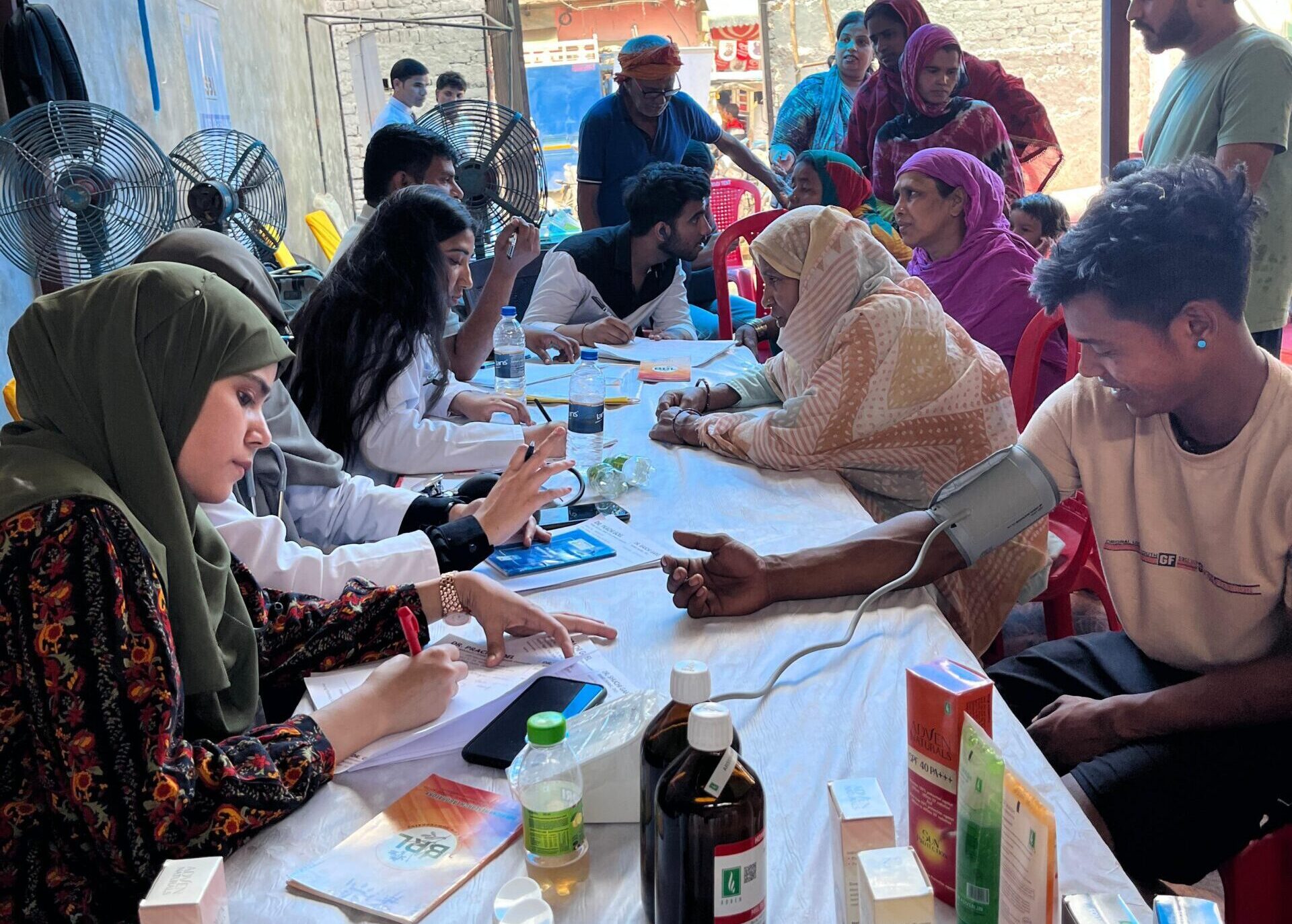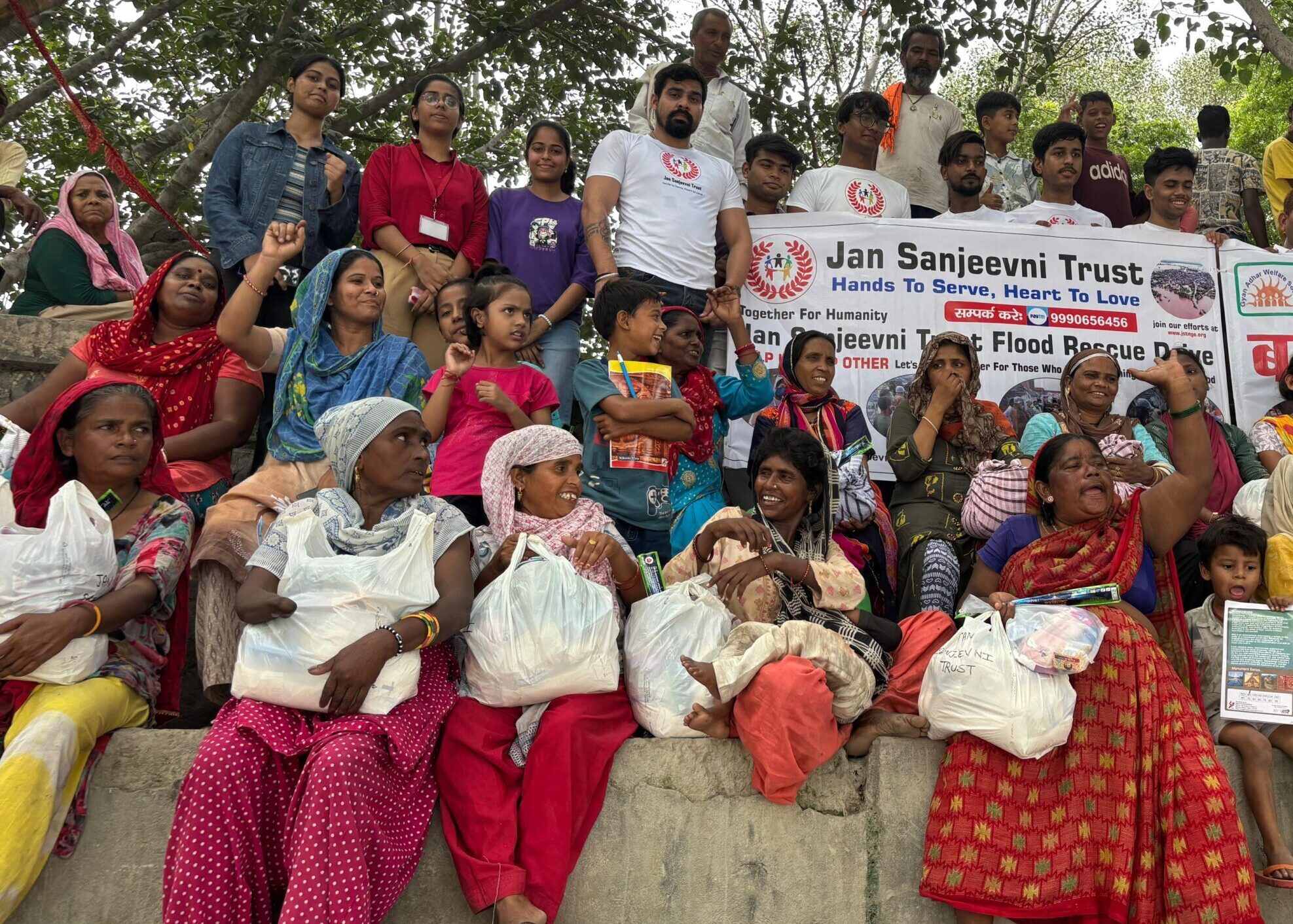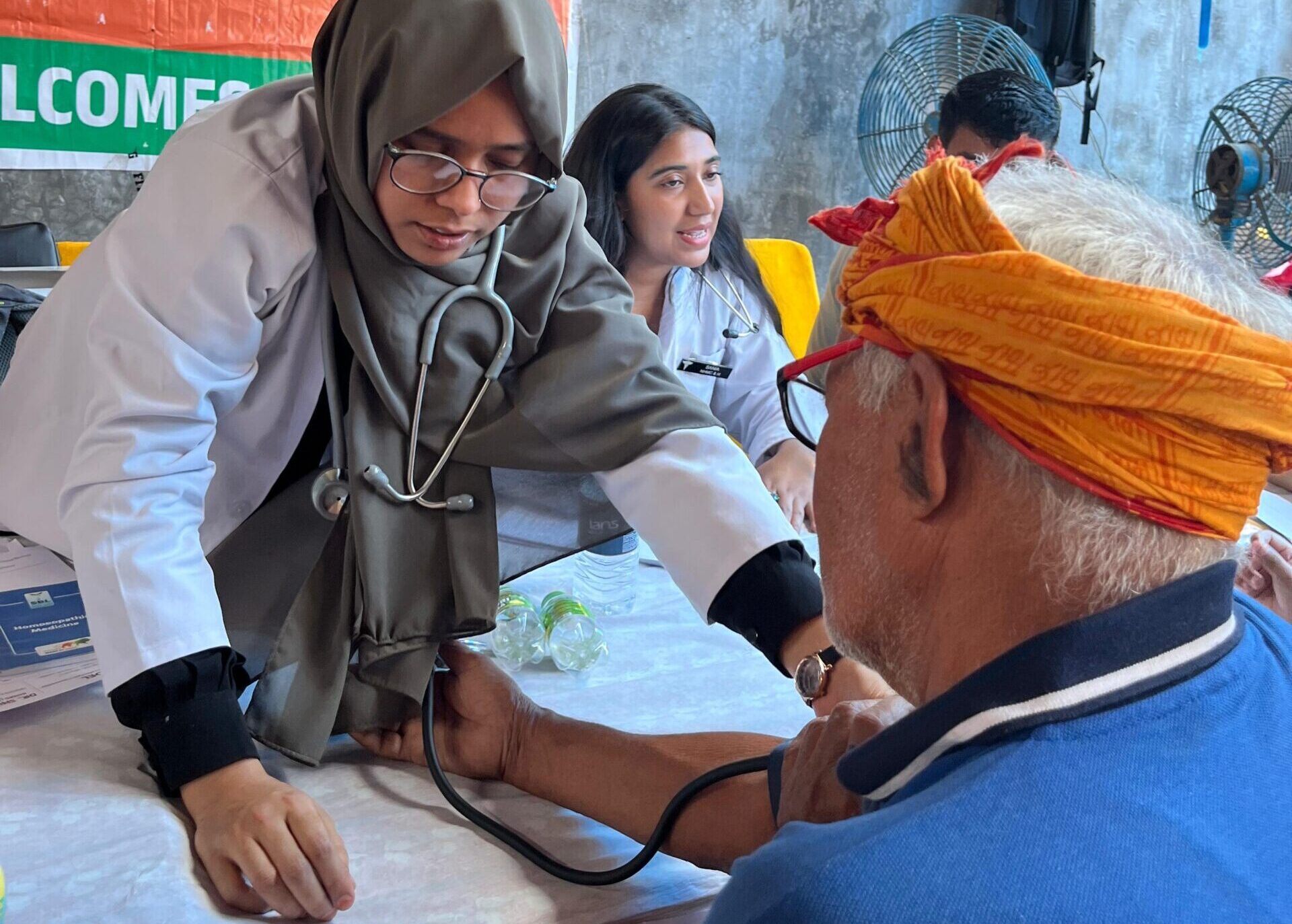
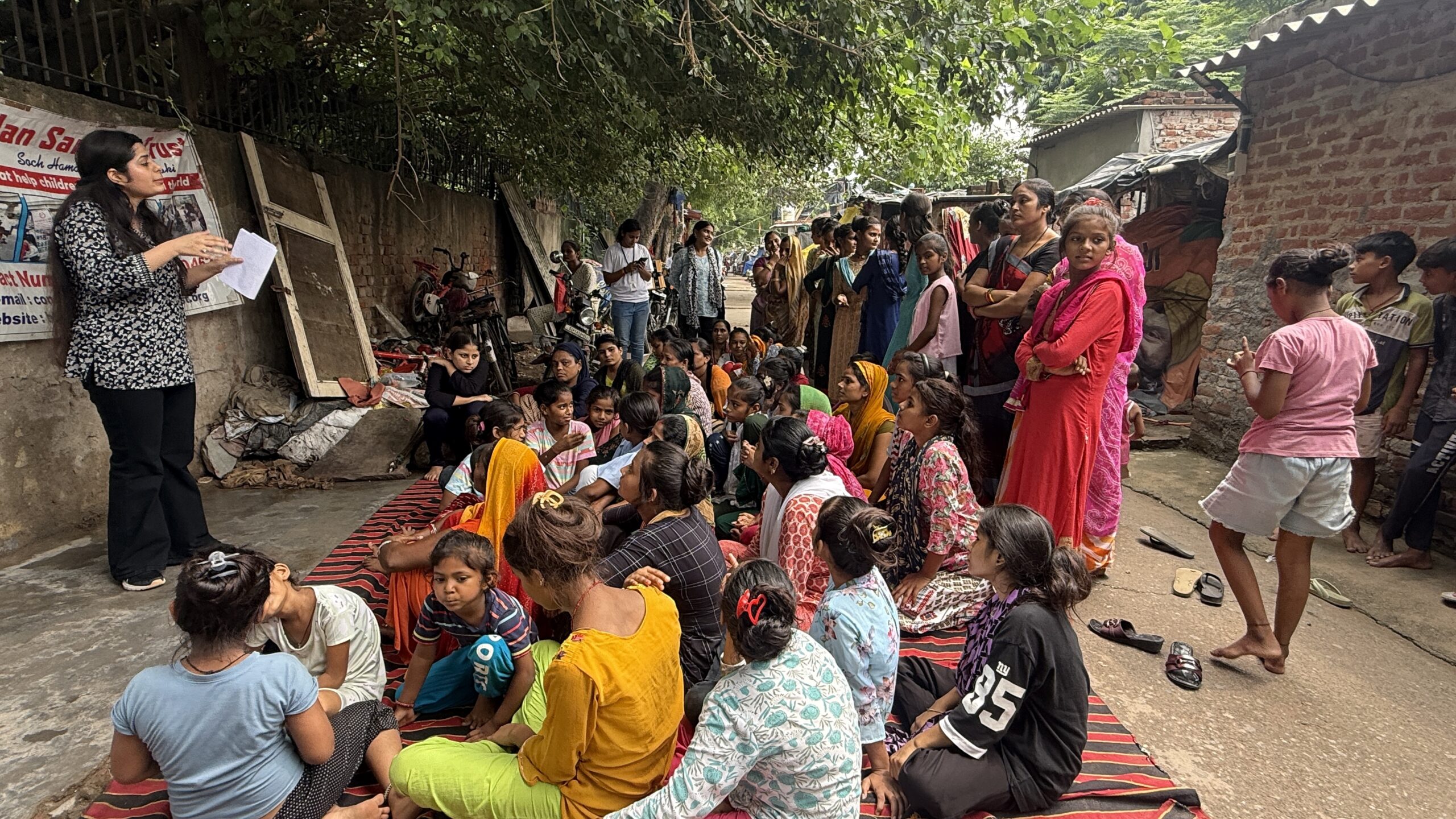
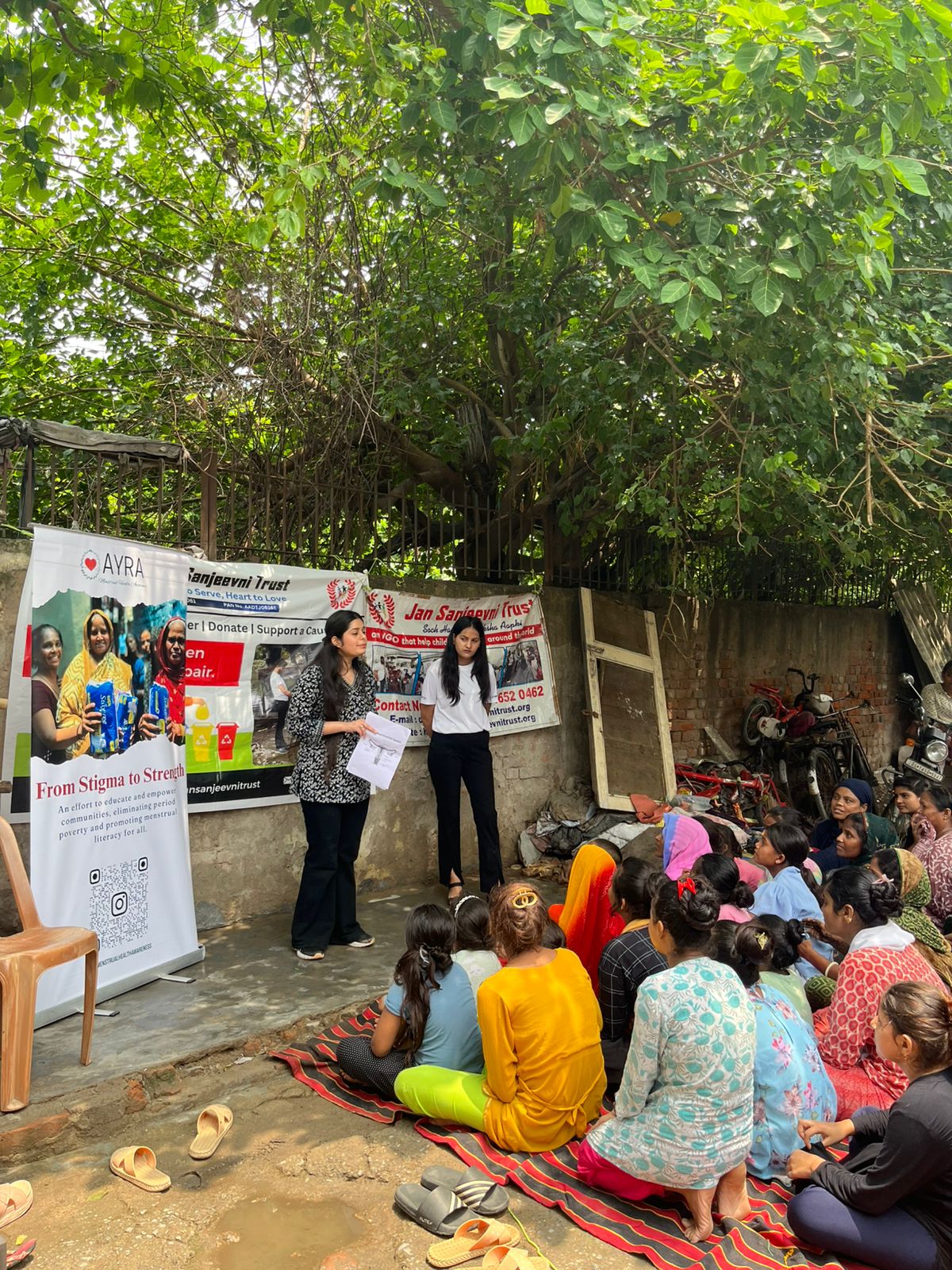
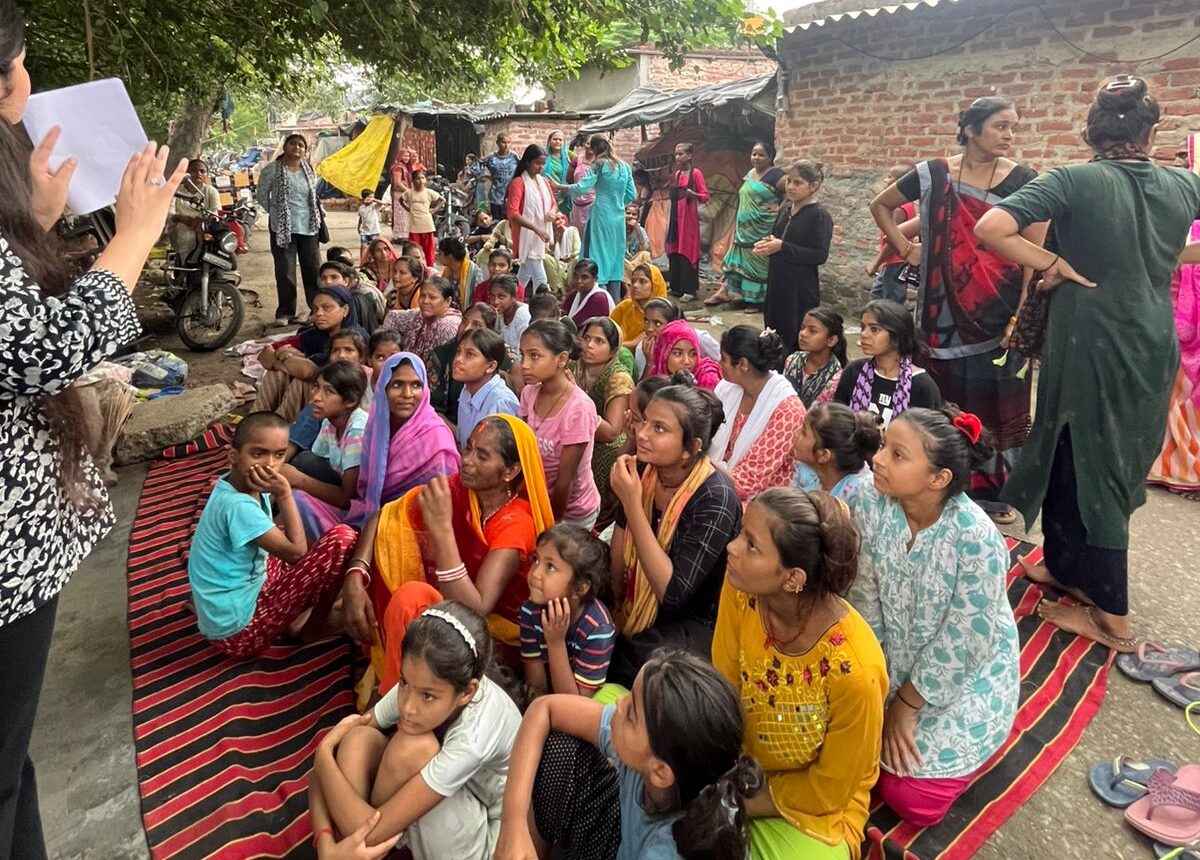
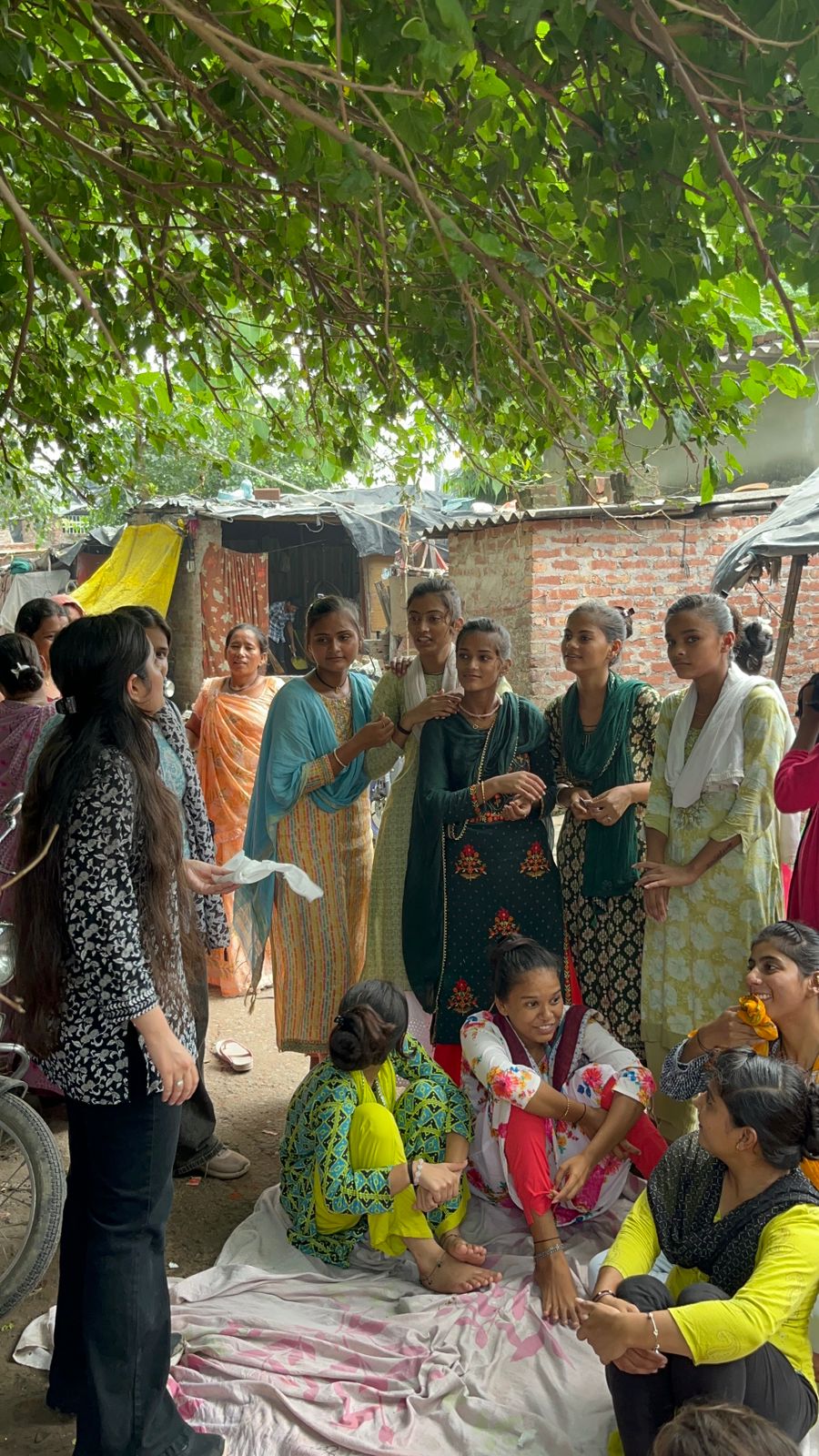
One such conversation took place during a community outreach program conducted by Jan Sanjeevni Trust in a slum settlement. It brought together women and young girls from the community—some curious, some hesitant, and some simply there to listen.
At first, the room was quiet.
Many of the women had spent years following customs and beliefs they had never questioned. Many of the girls had entered adolescence with little understanding of the changes taking place in their own bodies. Menstruation was something they experienced every month, yet it remained a topic that was rarely discussed openly.
As the session began, stories slowly started emerging.
A young girl shared how she had been told not to touch pickle jars during her periods. Another spoke about being asked to stay away from certain activities for a few days every month.
Several women nodded in agreement. These were not unusual experiences for them. They were simply things they had grown up believing.
And that is what made the conversation so important.
Not because anyone was being blamed for these beliefs, but because for the first time, many women were being given the opportunity to understand the difference between tradition and fact.
Slowly, hesitation turned into curiosity.
Questions began to flow.
Why do periods happen?
Is it really necessary to follow all these restrictions?
Can girls continue their normal activities during menstruation?
The answers were simple, honest, and rooted in science. More importantly, they were shared with empathy and understanding.
There was no judgment in the room—only learning.
And perhaps that is how meaningful change begins.
Not through lectures, but through conversations.
Not by telling people they are wrong, but by helping them understand.
As women listened and shared their experiences, something remarkable happened. The discomfort and silence that often surround discussions on menstruation gradually gave way to confidence and openness.
One could see it in their expressions.
The relief of realizing that periods are natural.
The comfort of knowing they were not alone.
The confidence that comes from finally receiving answers to questions they had carried for years.
At one point, an elderly woman quietly said,
“हमें कसी ने कभी समझाया ही नहीं, बस बताया गया क ऐसा ही होता है।”
The room fell silent for a moment.
It was a simple sentence, but it reflected the experience of many women present there. For years, they had followed practices and restrictions without ever being given the opportunity to ask why.
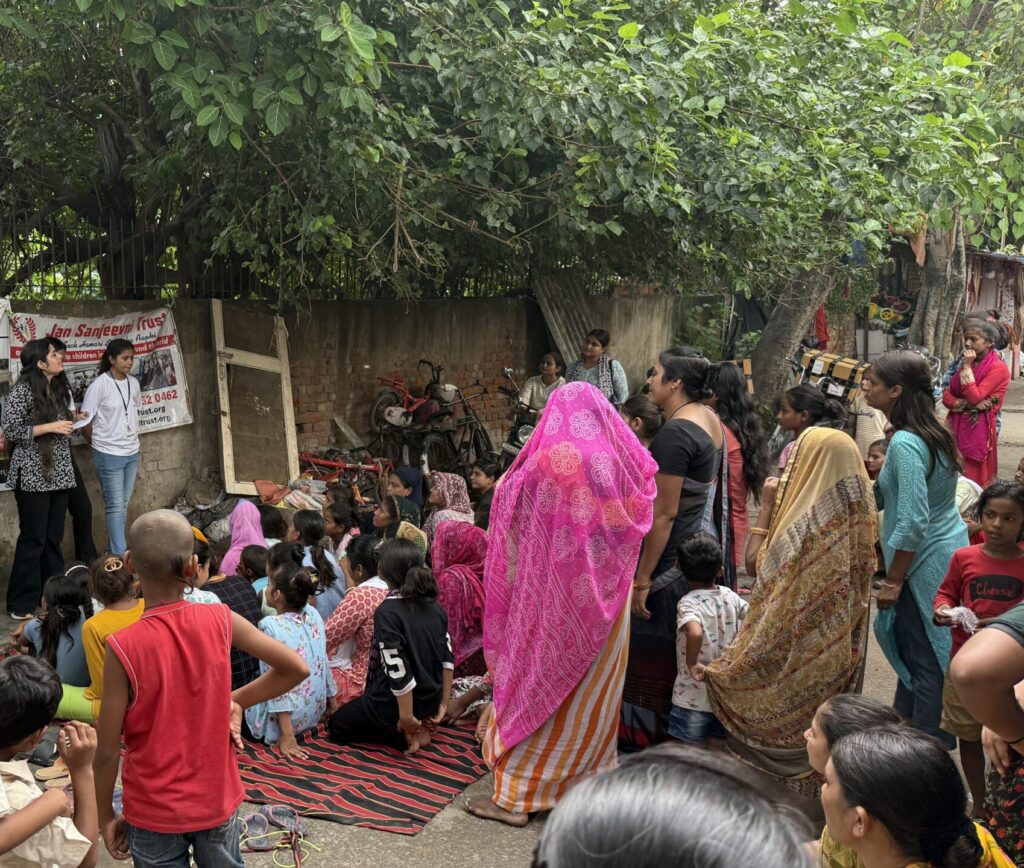
For many of us, access to information is something we take for granted. But for countless women living in underserved communities, even basic awareness about menstrual health can make a significant difference.
Knowledge empowers.
It gives women the ability to make informed decisions for themselves and their families. It allows mothers to guide their daughters with confidence. It helps young girls grow up without fear or embarrassment about their own bodies.
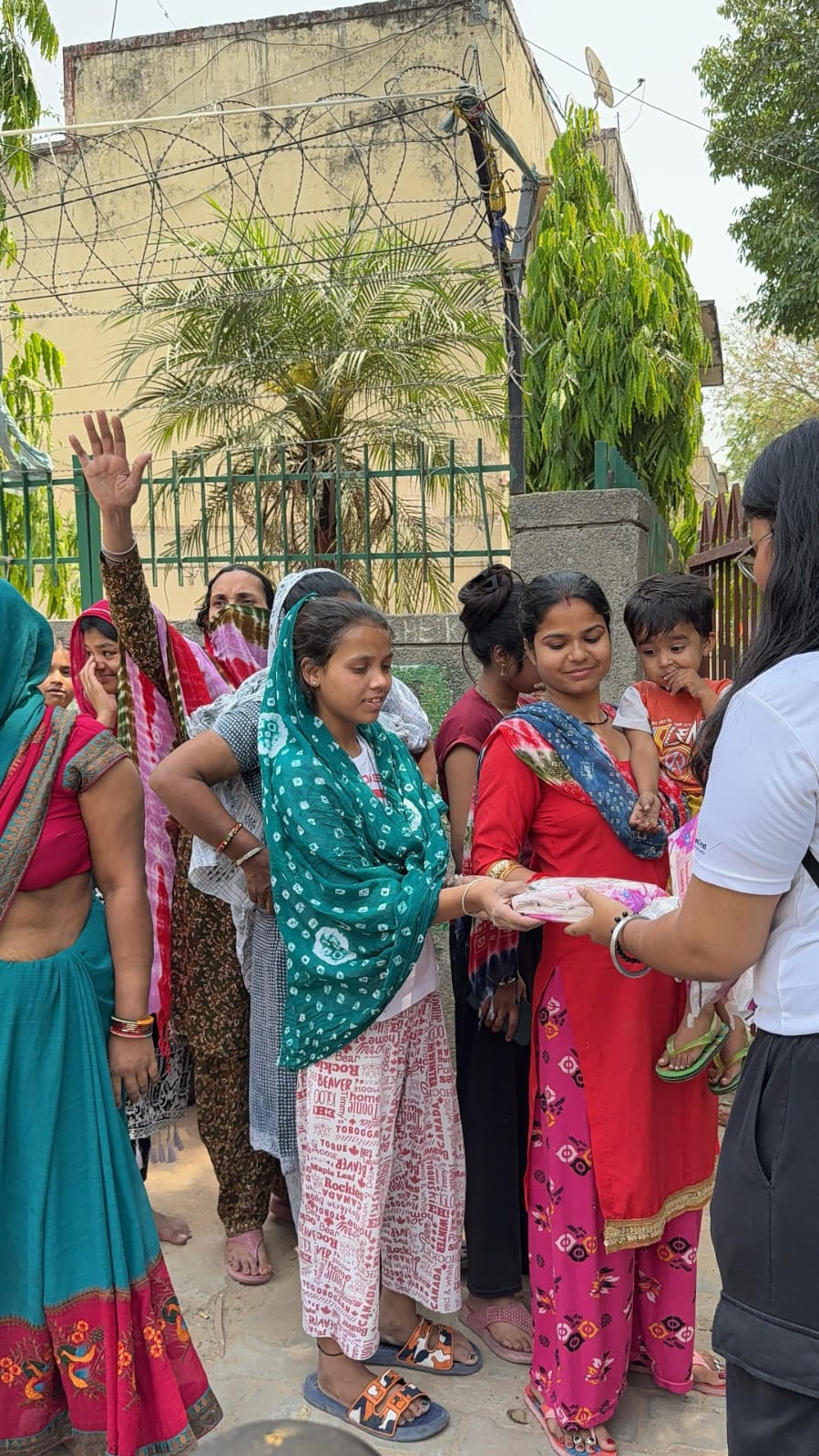
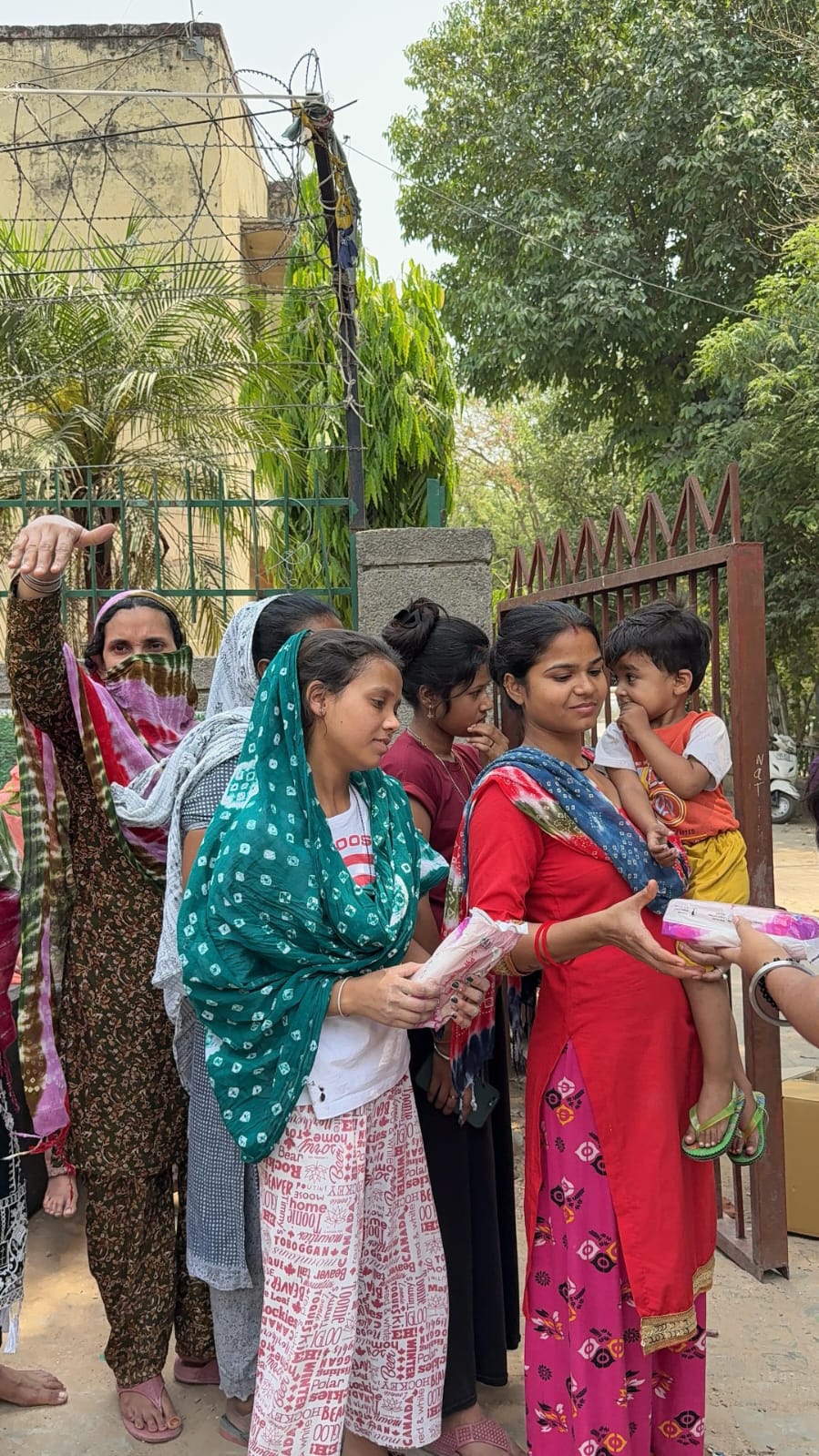
Recognizing that awareness and accessibility must go hand in hand, Jan Sanjeevni Trust also ensured that practical support reached the community.
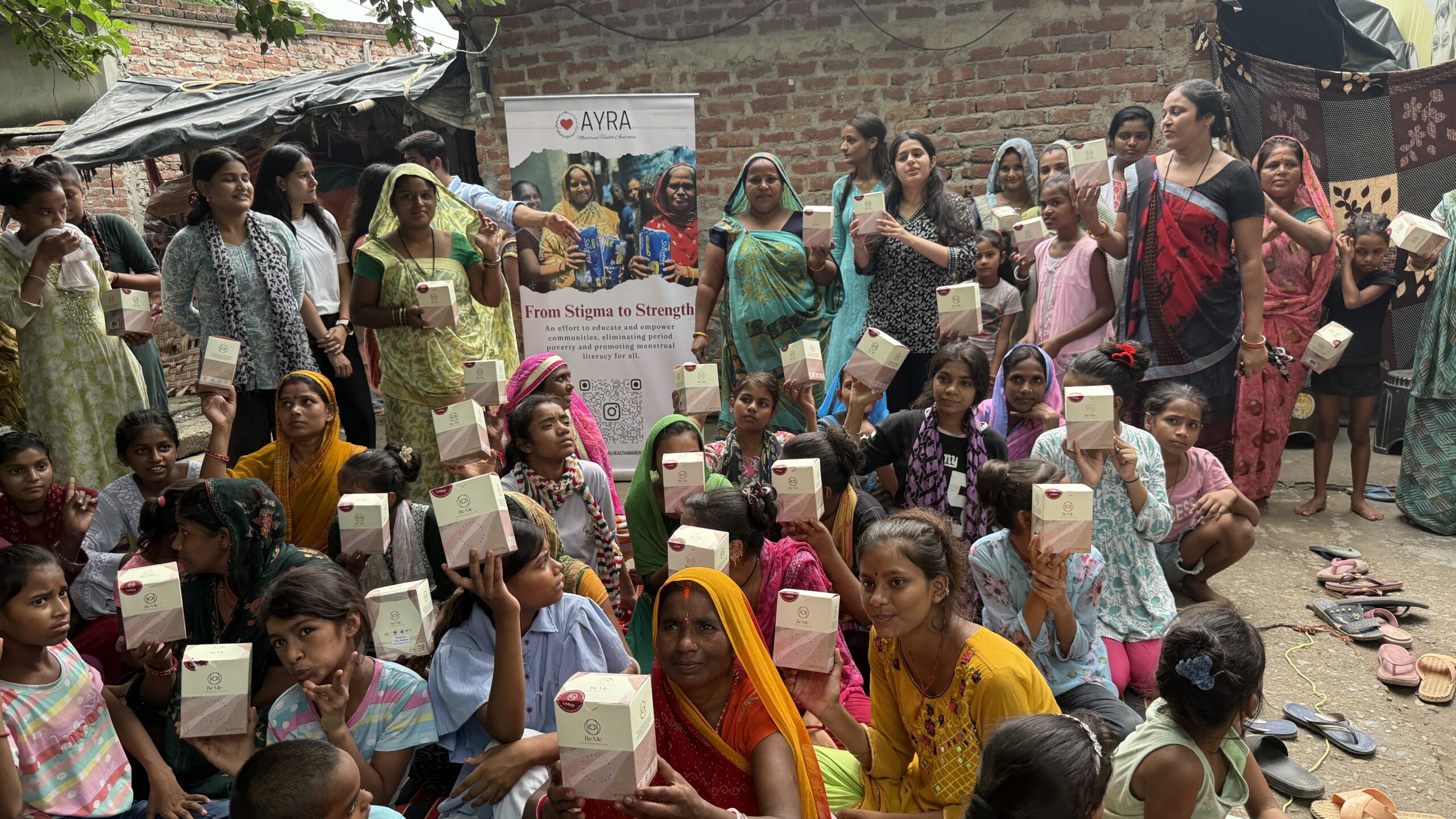
In collaboration with Ayra Foundation, Be Me sanitary napkins were distributed among women and adolescent girls attending the program.
The distribution may have appeared to be a small gesture, but its impact extended far beyond the products themselves.
For some girls, it meant access to safe menstrual hygiene products without placing an additional financial burden on their families.
For some mothers, it meant learning better ways to care for their health.
For many women, it served as a reminder that their well-being matters.
What made the initiative particularly meaningful was not just the distribution itself, but the message behind it.
A message that every girl deserves dignity.
That every woman deserves access to accurate information and basic healthcare.
That menstrual health should never be treated as a privilege.
As the session drew to a close, the atmosphere felt noticeably different from when it had begun.
The women who had arrived quietly were now engaged in conversation.
Girls who had initially hesitated to speak were asking questions with confidence.
There were smiles, discussions, and a sense of comfort that comes when people feel heard and
understood.
Just before leaving, a young girl who had remained quiet for most of the session smiled and
said,
“आज पहली बार लगा क पीरयड्स कोई शम की बात नहीं है।”
It was a small statement.
But in many ways, it captured the purpose of the entire initiative.
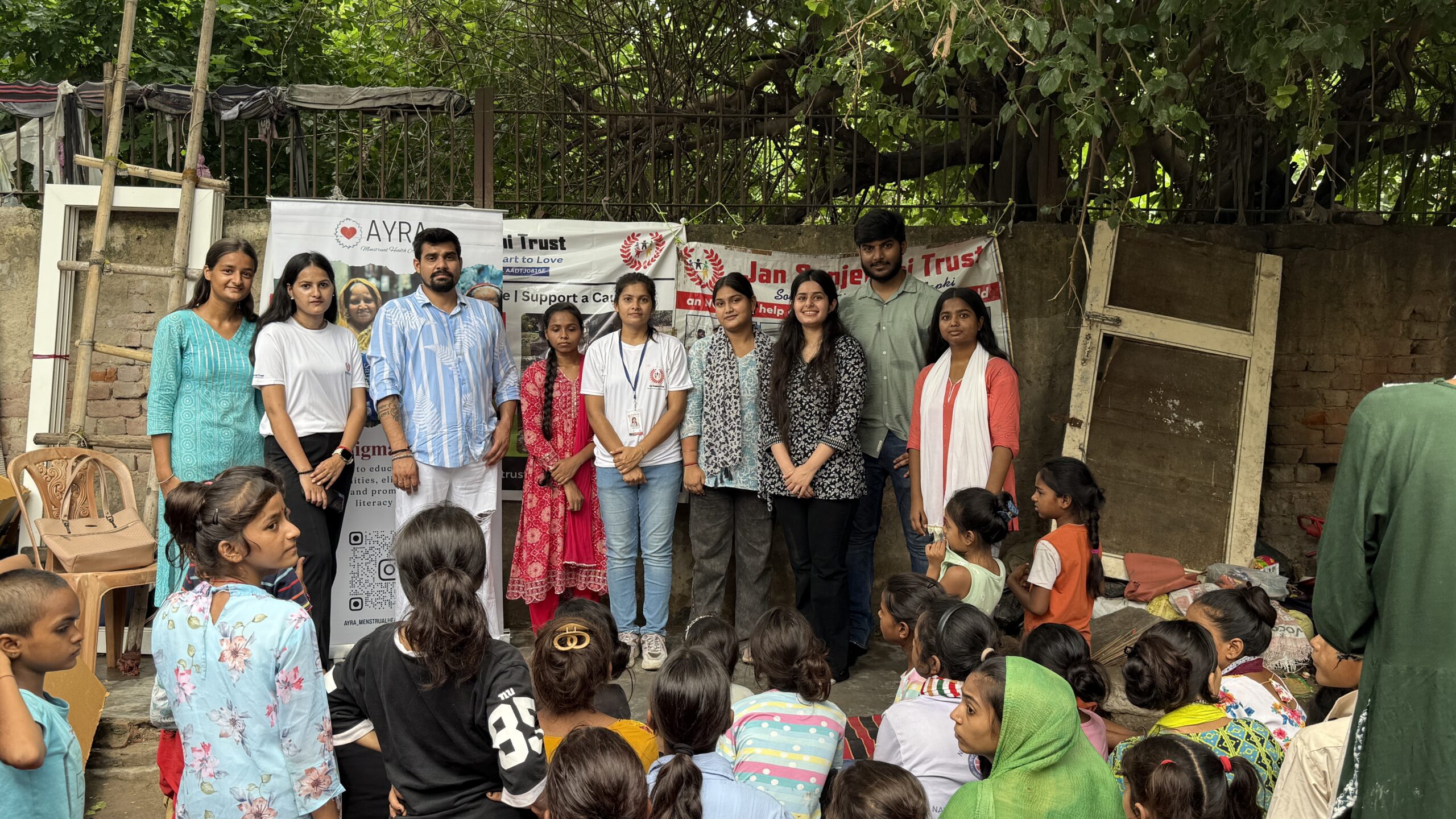
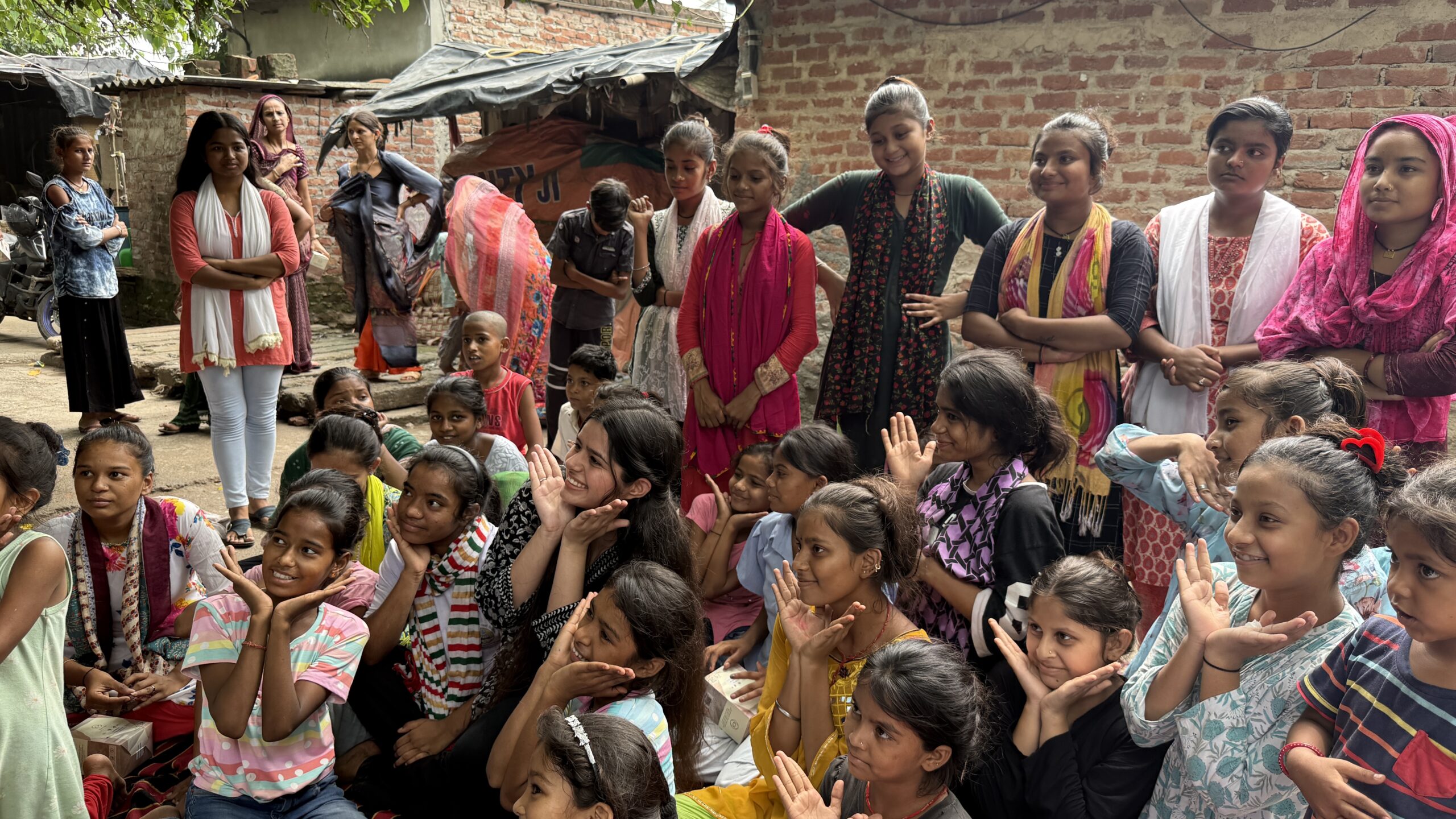
Those moments may seem small.
But lasting change often begins with small moments.
A conversation.
A question.
A new understanding.
A little more confidence than yesterday.
At Jan Sanjeevni Trust, initiatives like these are about much more than conducting awareness programs. They are about building trust within communities, creating safe spaces for dialogue, and ensuring that women and girls have the knowledge and support they need to lead healthier and more confident lives.
Because empowerment does not always arrive through grand gestures.
Sometimes it begins when a mother decides that her daughter will grow up with knowledge instead of fear.
Sometimes it begins when a girl learns to speak openly about her health without hesitation.
Sometimes it begins when a woman realizes that the questions she carried for years deserve answers.
And sometimes it begins with a simple conversation that helps someone feel seen, heard, and understood.
Because every woman deserves access to knowledge.
Every woman deserves dignity.
And every woman deserves the opportunity to lead a healthy, confident, and empowered life.